What Automation Actually Looks Like for Logistics Businesses in 2026
- October 05, 2026
- Chauffeur & Fleet
- By Fajraan Tech
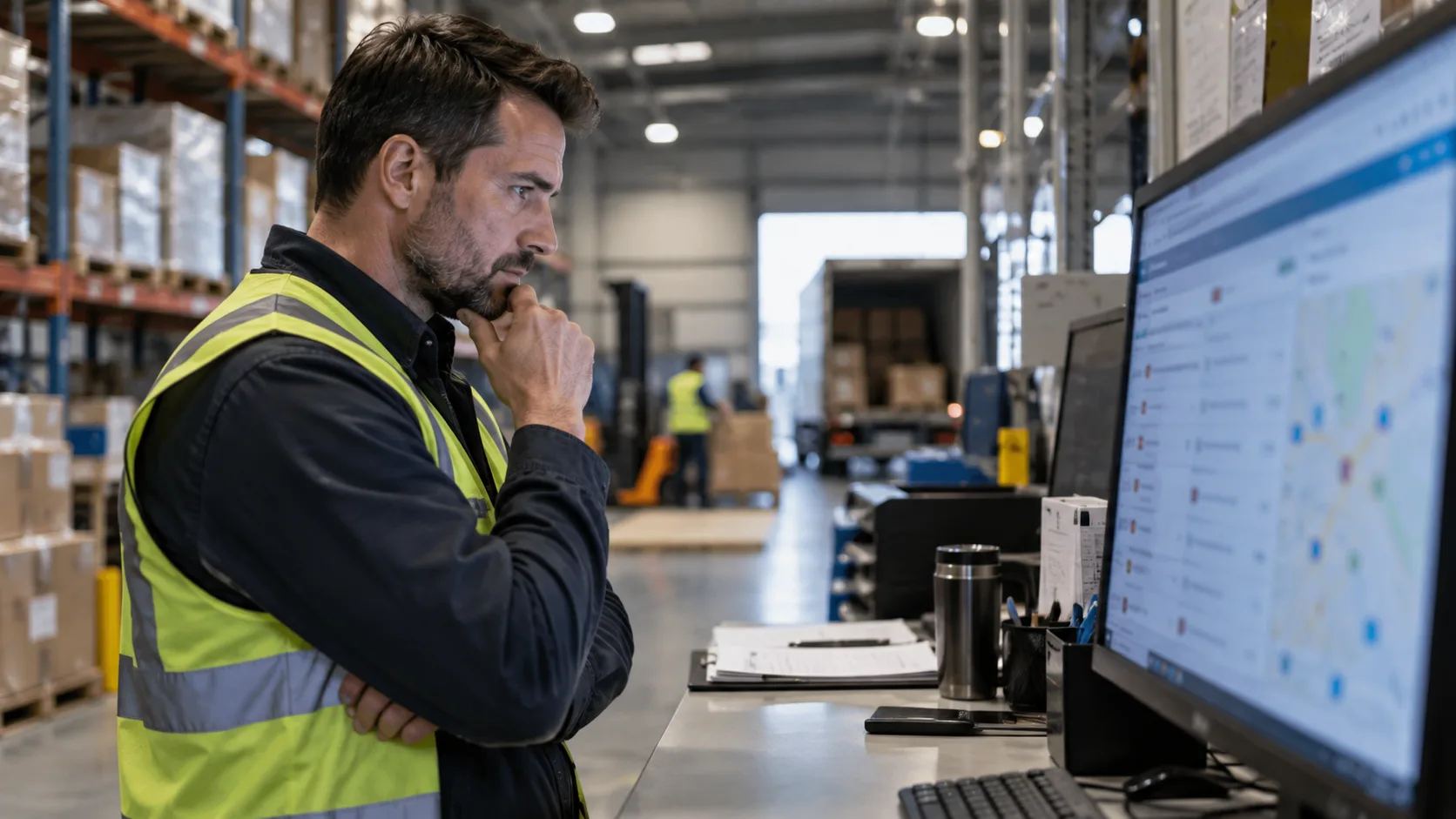
Logistics automation gets discussed frequently in fairly abstract, sometimes futuristic terms, autonomous vehicles, fully robotic warehouses, images that feel more relevant to massive enterprise operations than to the mid sized and smaller logistics businesses that make up a huge share of the actual industry. The real, practical automation happening in logistics right now looks considerably less dramatic, and considerably more immediately useful, than the more sensational version of this conversation.
Here is what automation actually looks like for a real, working logistics business today.
Automated dispatch and driver assignment
Rather than a dispatcher manually matching each new job to an available driver by phone or radio, automated systems can assign jobs based on driver location, availability, and route efficiency in real time. This is not a futuristic concept. It is genuinely available and increasingly common technology that directly reduces dispatch time and manual coordination effort for logistics businesses of a wide range of sizes.
Automated status updates and communication
A significant portion of logistics communication involves repetitive updates, confirming pickup, notifying of delays, providing delivery confirmation. Automation handling these routine communications, triggered by actual status changes rather than manual entry, frees up staff time and provides customers with more timely, consistent information than manual communication typically achieves.
Predictive maintenance based on vehicle data
Rather than maintenance schedules based purely on fixed time or mileage intervals, some logistics operations are increasingly using vehicle data to predict maintenance needs more precisely, based on actual usage patterns and early indicators of developing issues, catching problems before they become costly breakdowns.
Automated documentation and paperwork
Logistics involves considerable documentation, delivery confirmations, compliance records, invoicing. Automation handling the generation and organization of this documentation, rather than manual entry and filing, reduces both the time cost and the error rate associated with manually managing this volume of paperwork.
Route optimization that adjusts throughout the day
As covered in more depth elsewhere, automated route optimization that adjusts dynamically based on real time conditions, rather than a fixed plan set once at the start of the day, represents a genuinely practical and increasingly accessible form of automation directly reducing fuel costs and improving delivery timing.
Where full automation, like autonomous vehicles, actually stands
To be honest about the more futuristic end of this conversation, fully autonomous vehicle technology, while genuinely advancing, remains largely in limited pilot programs and specific, controlled use cases rather than being a practical, widely available solution for most logistics businesses in 2026. Businesses waiting for this specific technology to mature before investing in any automation are missing considerable, genuinely available value in the meantime.
Why the practical version matters more than the dramatic version
The automation actually delivering real value to logistics businesses right now is less visually dramatic than autonomous vehicles or robotic warehouses, but it is genuinely available, genuinely affordable relative to its return, and genuinely capable of meaningfully improving efficiency and reducing operational cost today, rather than at some uncertain future point.
What this means for a logistics business deciding where to focus
Rather than waiting for more dramatic automation technology to mature, logistics businesses benefit most right now from focusing on the practical, available automation already directly addressing real operational costs, dispatch efficiency, communication overhead, maintenance planning, and route optimization. These are not futuristic bets. They are proven, accessible tools already delivering measurable value for businesses adopting them today.
The realistic path forward
Logistics businesses seeing genuine success with automation tend to start with one or two of these practical areas, prove real value, and expand from there, rather than attempting a sweeping, all at once automation transformation. This measured, practical approach reflects where the technology genuinely stands today, rather than the more dramatic version of automation that still remains largely aspirational for most of the industry.
Frequently Asked Questions
Q: What does practical automation actually look like for logistics businesses in 2026? A: Practical automation currently includes automated dispatch and driver assignment, automated status updates and customer communication, predictive maintenance based on vehicle data, automated documentation, and dynamic route optimization, rather than more futuristic technology like fully autonomous vehicles.
Q: Are autonomous vehicles widely used in logistics yet? A: No, not widely. Fully autonomous vehicle technology remains largely limited to pilot programs and specific controlled use cases rather than being a practical, broadly available solution for most logistics businesses currently.
Q: How does automated dispatch actually help logistics businesses? A: Automated dispatch assigns jobs based on driver location, availability, and route efficiency in real time, reducing the manual coordination effort and time typically required when a dispatcher assigns each job individually by phone or radio.
Q: Does automation reduce the amount of paperwork in logistics operations? A: Yes. Automation can handle the generation and organization of delivery confirmations, compliance records, and invoicing, reducing both the time cost and error rate associated with manually managing this documentation.
Q: Where should a logistics business start with automation? A: Most businesses see the best results starting with one or two practical, currently available areas, such as dispatch automation or route optimization, proving real value there, and expanding gradually rather than attempting a sweeping transformation all at once.
- #logistics automation
- #fleet management
- #dispatch software
- #supply chain technology
- #transportation industry
- #business automation
- #logistics technology 2026